10 hours ago
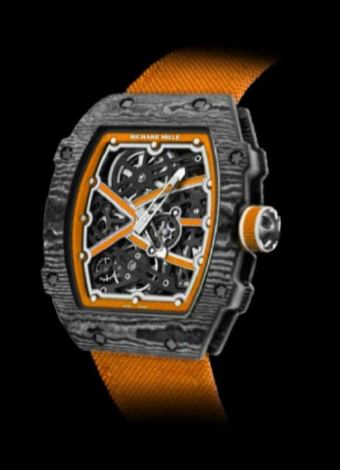
richard mille ai service operations
Introduction: the promise nobody markets
Technical extremity creates a specific obligation. A movement built to survive competition still needs servicing, and the more unusual the architecture, the fewer people on earth are qualified to work on it. Clients buying at this level are not merely purchasing a watch — they are purchasing the certainty that it will be repairable in fifteen years, somewhere reasonably near them.
That obligation is an operations problem before it is a brand one. AI service network optimisation for luxury watches is the discipline of making it solvable: where service capacity should exist, how a fault is diagnosed before a watch crosses a border, what parts must be waiting locally, and when the client can realistically expect it back.
replica Richard Mille RM UP-01 Ferrari
swiss replica watches
luxury replica watches
Stage 1 — Network design: placing scarce expertise where it is needed
Service networks for highly technical watches cannot be dense. Full factory-level capability is concentrated in one or two sites; regional centres handle intake, diagnostics and defined interventions; authorised partners handle triage only. Deciding what belongs at each tier is a permanent balancing act between client convenience, capital cost and quality control.
Models make the trade-off explicit. Combine the installed base by region, historical service incidence by reference and age, transit times, customs friction and client density, then simulate alternative network configurations. The output is not a single answer but a frontier: adding a capability to a regional centre reduces turnaround by this much, at this cost, with this utilisation. Leadership can then decide how much convenience the brand intends to promise.
Seasonality matters more than expected. Service demand clusters around warranty expiry, pre-sale inspections and major events — exactly the periods when a thin network is most likely to miss its commitments.
Stage 2 — Intake: remote diagnostics before the watch travels
A substantial share of service intake is unnecessary transit: a watch shipped internationally for a problem that is magnetic, positional, or simply a misunderstood function.
AI remote diagnostics for mechanical watches reduces that waste. A client or partner uploads a timegrapher trace, a short video of the complication cycling, and symptom descriptions. Models compare the pattern against a library of known fault signatures — amplitude loss concentrated in vertical positions, intermittent chronograph reset hesitation, rate instability following temperature change — and triage the case: resolvable remotely, eligible for a regional centre, or requiring the manufacture.
Triage is a commercial advantage as well as a logistical one. Clients who receive a confident explanation and a clear plan within hours do not experience the uncertainty that usually defines luxury after-sales, even when the physical repair still takes weeks.
Stage 3 — Repair: assisting the few people who can do the work
Once the watch reaches a bench, the constraint returns to expertise. An unusual complication may have only a handful of documented interventions worldwide, and the technician facing it may be seeing that specific failure for the first time.
Case-based retrieval helps. Models surface the closest historical interventions — same reference, similar symptom, comparable component wear — with the actual resolution and the pitfalls recorded. AR-assisted watch repair training extends this to the bench: overlays show disassembly order, torque sequences and the location of parts that are easy to damage, while the technician retains full control of every action.
The distinction from manufacturing training is worth stating. Service work is diagnostic and non-repetitive — the same watch never arrives twice in the same condition. Guidance must therefore be retrieval-based and contextual, not a fixed procedure rehearsed to mastery.
Each completed intervention becomes a new case, which compounds. A network that documents its work systematically becomes more capable every year without hiring proportionally.
replica luxury watches
high quality replica watches
Stage 4 — Parts: inventory where waiting is unacceptable
Service inventory is the inverse of production inventory. Demand is intermittent, spread across decades-old references, and a single missing component can hold a watch for months. Conventional forecasting fails because the average demand for most service parts is close to zero.
AI spare parts inventory for watch service centres optimises at the network level rather than the site level. Models combine installed-base age profiles, component failure distributions, transit times and the cost of stocking a part in each location to decide what sits where — including the sensible strategy of holding rare parts centrally and dispatching them express rather than duplicating them across every hub.
For parts no longer in production, digital definitions make on-demand manufacture viable. Additive processes can produce a single component from a validated definition, turning an obsolete-part shortage into a scheduling question. The long-horizon version of this problem is covered in AI spare parts demand forecasting in watchmaking ; service operations execute against those estimates week by week.
Stage 5 — Commitment: predicting turnaround honestly
The most common cause of after-sales dissatisfaction is not slow service — it is a date that was never realistic.
AI turnaround time prediction for watch service models the full path: intake, customs clearance, transit, queuing at each tier, diagnostic complexity, parts availability, repair duration, quality verification and return shipping. Each stage has its own distribution, and the model produces a range with a stated confidence rather than a single optimistic number.
That output changes client communication. A realistic six-to-eight-week window given upfront is experienced very differently from four weeks that become ten. It also changes internal behaviour: when the model shows that a specific customs route is the dominant source of variance, the operations team can address the cause rather than apologising for the symptom.
Stage 6 — Verification and learning: closing the loop
A service intervention is not complete until the watch performs to specification again — and until the intervention has been recorded.
Post-service measurement is compared against the piece's own production record, so degradation between manufacture and service becomes visible rather than assumed. That data feeds predictive maintenance for mechanical watches , sharpening the estimate of when the next intervention will genuinely be needed rather than defaulting to a fixed interval.
It also travels backwards into design. If one component family generates disproportionate service events in a particular climate, that association is evidence for the next generation of the movement — the same learning loop described in AI knowledge graph for watchmaking engineering , supplied here by the field rather than by the test bench.
Finally, verified service history protects value. When the blockchain-backed digital watch passport records every intervention, insurance and resale conversations start from documented fact.
wholesale replica watches
fashion replica watches
https://www.prowatchduo.co.uk
Where AI stops: four limits
Expertise cannot be cloned. Guidance scales the reach of a small number of specialists; it does not create more of them.
Some faults require disassembly. Remote triage reduces unnecessary transit but will always have a residual error rate, and the policy must absorb occasional wrong calls without blaming the client.
Data sharing is uneven. Regional partners may not capture observations consistently, which limits model quality precisely where the network is thinnest.
Service is a promise, not a metric. Hitting a turnaround target while damaging the relationship is a failure no dashboard flags.
FAQ
Can AI diagnose a mechanical watch remotely? It can reliably classify common fault signatures and route cases appropriately. Definitive diagnosis of internal wear still requires disassembly.
Why not stock every part at every service centre? Because most service parts have near-zero annual demand. Network-level optimisation plus express central dispatch delivers better availability at a fraction of the inventory cost.
Does AR guidance reduce the need for master technicians? No. It reduces the time they spend looking up procedures and helps regional teams handle defined interventions safely.
How much can turnaround prediction improve? The largest gain usually comes from giving a defensible date early, not from compressing the repair itself.
Conclusion: after-sales is the hardest engineering test
A watch that cannot be serviced is a watch that eventually leaves circulation. For a manufacture whose identity rests on technical extremity, service capability is therefore not a support function — it is part of the product specification.
For replica Richard Mille, AI's role is to make that capability globally consistent: the right capacity in the right places, diagnoses before unnecessary transit, parts where waiting would be unacceptable, and dates clients can actually plan around.